
How to Play Pickleball: Rules, History, and What Pickleball Is All About
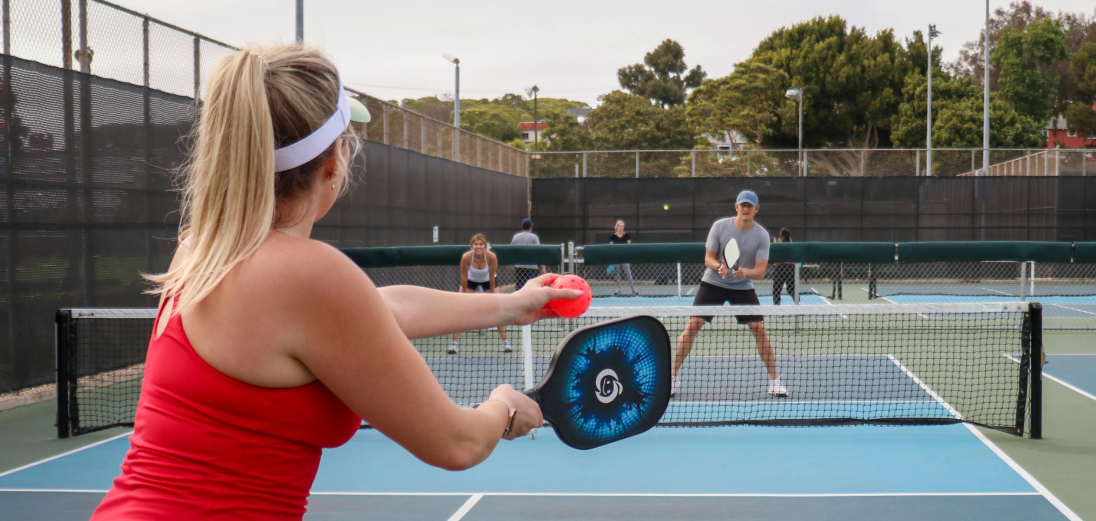
Sport doesn’t always emerge from grand institutional ambition. Sometimes it arrives from a summer afternoon, bored children, improvised equipment, and the specific creative energy that genuine play produces when nobody is trying to invent anything important. Pickleball’s origin story carries exactly this accidental authenticity — a backyard game that became America’s fastest-growing sport through decades of organic community spread before anyone recognized what was actually happening.
db bet follows emerging sports with genuine analytical interest — recognizing that understanding what is pickleball, how to play pickleball, and why the sport has captured mainstream sporting attention across demographics that established racket sports rarely penetrate simultaneously provides essential context for appreciating one of contemporary sport’s most interesting growth stories.
What Is Pickleball?
Pickleball is a paddle sport combining elements from tennis, badminton, and table tennis into something simultaneously familiar and distinctively different from any of its influences. Played on a court roughly one-third the size of a tennis court, using solid paddles and a perforated plastic ball, pickleball creates competitive exchanges whose pace and physical demands sit comfortably between tennis’s intensity and ping pong’s accessibility.
This positioning between established sports is precisely what drives pickleball’s extraordinary demographic reach. Tennis requires significant athletic investment to play enjoyably. Table tennis demands table access and spatial constraints. Pickleball occupies a genuinely comfortable middle ground — accessible enough for older players and beginners, competitive enough for serious athletes seeking genuine challenge.



Why Is It Called Pickleball? 🤔
The naming question generates more interest than almost any other aspect of pickleball’s story — and the honest answer involves competing claims that the sport’s founding family has never definitively resolved.
One account attributes the name to the Pritchard family dog — a cocker spaniel named Pickles who reportedly chased errant balls during early games on Bainbridge Island in 1965. The dog-first story carries obvious narrative appeal, which may explain why it circulates most widely despite competing evidence.
Joel Pritchard’s wife Joan offered a different explanation — that the game’s combination of different sports reminded her of the pickle boat in crew rowing, where oarsmen were selected from leftovers of other boats. The pickle boat etymology carries more linguistic logic but less storytelling charm than the dog version.
The 1965 Origin Story
Pickleball’s documented origin places it on Bainbridge Island, Washington, in the summer of 1965. Joel Pritchard — later a US Congressman — returned home to find his family bored with nothing to do. Working with neighbor Bill Bell and friend Barney McCallum, Pritchard improvised a game using ping pong paddles, a perforated plastic ball, and a badminton court whose net was progressively lowered as the game developed.
The improvised nature of that original session matters for understanding pickleball’s subsequent development. Nothing about the original equipment was purpose-designed — the game emerged from whatever was available, and its rules developed through play rather than prior planning. This organic beginning created a sport whose accessibility remains fundamentally embedded in its DNA decades after professional standardization arrived.
How to Play Pickleball: The Basics 🏓
Understanding how to play pickleball begins with the court — a 44-foot by 20-foot rectangular playing surface whose most distinctive feature is the non-volley zone, universally called the kitchen, extending seven feet from the net on both sides.
The kitchen rule is pickleball’s most strategically important and distinctive regulation — players cannot volley the ball while standing within this zone, preventing the net-domination strategies that would otherwise make skilled players nearly unbeatable from close positions. This single rule creates the tactical complexity that makes pickleball genuinely interesting beyond its surface accessibility.
Serving initiates each point through an underhand diagonal serve that must clear the net and land in the opposite service box beyond the kitchen. Unlike tennis, only the serving side scores points — a rotation system advancing service between players creating cumulative pressure management that beginners grasp quickly but experienced players exploit strategically.
Pickleball Rules: The Details That Matter
Pickleball rules contain several specific regulations whose understanding transforms casual play into genuine competitive engagement. The double bounce rule — both the serve and return must bounce before players may volley — forces an initial baseline exchange that prevents immediate net rushes and creates the rallying patterns that make pickleball genuinely enjoyable for players across skill levels.
Games are typically played to 11 points, win by two — a scoring structure creating competitive tension without demanding the extended endurance that longer formats require. Tournament formats sometimes use 15 or 21-point games for specific competitive contexts, but recreational play’s 11-point standard has become globally recognized as pickleball’s default competitive framework.
Fault situations ending rallies include hitting the ball out of bounds, failing to clear the net, volleying from the kitchen, and serving errors. The relative simplicity of fault recognition makes pickleball genuinely self-officiated at recreational levels — players calling their own lines without requiring external officials for enjoyable competitive play.
The Kitchen: Pickleball’s Strategic Heart 🎯
No element of pickleball strategy generates more discussion, more tactical development, or more competitive differentiation between skill levels than kitchen management. The non-volley zone creates a specific tactical problem — how to approach the net and establish advantageous positions without violating the rule that prevents volleying from within it.
Dinking — soft, controlled shots that land in the opponent’s kitchen — has become pickleball’s most sophisticated tactical category. Patient dinking exchanges between skilled players create opportunities for opponents to pop balls up into volleyable positions, immediately converting defensive dinking into offensive opportunities. The transition from dinking patience to attacking aggression represents the tactical core that separates intermediate players from genuine advanced competitors.
Third-shot drops — soft returns after the serving team’s third shot that arc into the kitchen and force opponents back from aggressive positions — create the positional foundations from which skilled teams build net-domination advantages. Mastering this single shot type represents the most significant individual technical investment recreational players can make toward competitive improvement.
Equipment: Paddles and Balls
Pickleball equipment has evolved dramatically from the improvised ping pong paddles of 1965 into sophisticated purpose-designed implements whose materials and construction significantly influence playing characteristics. Modern paddles use carbon fiber, fiberglass, and polymer honeycomb core constructions that optimize specific combinations of power, control, and touch that different playing styles prioritize differently.
The perforated plastic ball — different outdoor and indoor versions optimized for different surface conditions — creates the specific flight characteristics that distinguish pickleball from other racket sports. Outdoor balls with smaller holes perform more predictably in wind. Indoor balls with larger holes create slower, more controlled exchanges that suit recreational environments where court surfaces differ from outdoor playing conditions.
Why Pickleball Is Growing So Fast 🌍
Pickleball’s extraordinary growth — from roughly 4.8 million players in 2021 to estimates exceeding 36 million in 2023 across the United States alone — reflects specific qualities that position the sport uniquely within contemporary recreational sports markets. Physical accessibility across age groups matters enormously — pickleball’s smaller court reduces running demands that make tennis increasingly difficult for older recreational players without reducing competitive satisfaction equivalently.
Social dynamics reinforce growth independently of playing quality. Pickleball’s doubles-dominant culture creates immediate social connection — four strangers sharing a small court develop familiar comfort within single sessions that larger-court sports rarely generate as quickly. This social acceleration drives word-of-mouth growth that marketing campaigns couldn’t manufacture at equivalent efficiency regardless of budget.
Professional league development — Major League Pickleball attracting significant investment and celebrity ownership — has added commercial legitimacy that accelerates facility construction, media coverage, and the general cultural visibility that transforms niche recreational activities into mainstream sporting phenomena.
The Competitive Future
Pickleball’s trajectory toward genuine international sporting status involves challenges that organic domestic growth hasn’t yet fully resolved. Standardization across international playing surfaces, equipment regulations, and competition formats requires the institutional coordination that rapidly growing sports frequently struggle to achieve before commercial interests fragment governance into competing organizational structures.
International federation development — establishing the global governance framework that Olympic inclusion ultimately requires — represents pickleball’s most significant institutional challenge. The sport’s growth has been so rapid and so geographically concentrated in North America that building genuine global competitive depth across the diverse nations that Olympic sports require hasn’t kept pace with domestic American enthusiasm.
What pickleball has demonstrated beyond reasonable doubt is that genuine sport innovation remains possible — that new competitive disciplines can emerge, develop authentic communities, and build genuine competitive ecosystems even within a contemporary landscape crowded with established sports competing for attention, facility space, and participant time.
