
What Is Taekwondo? Exploring Martial Arts and Is Taekwondo Korean
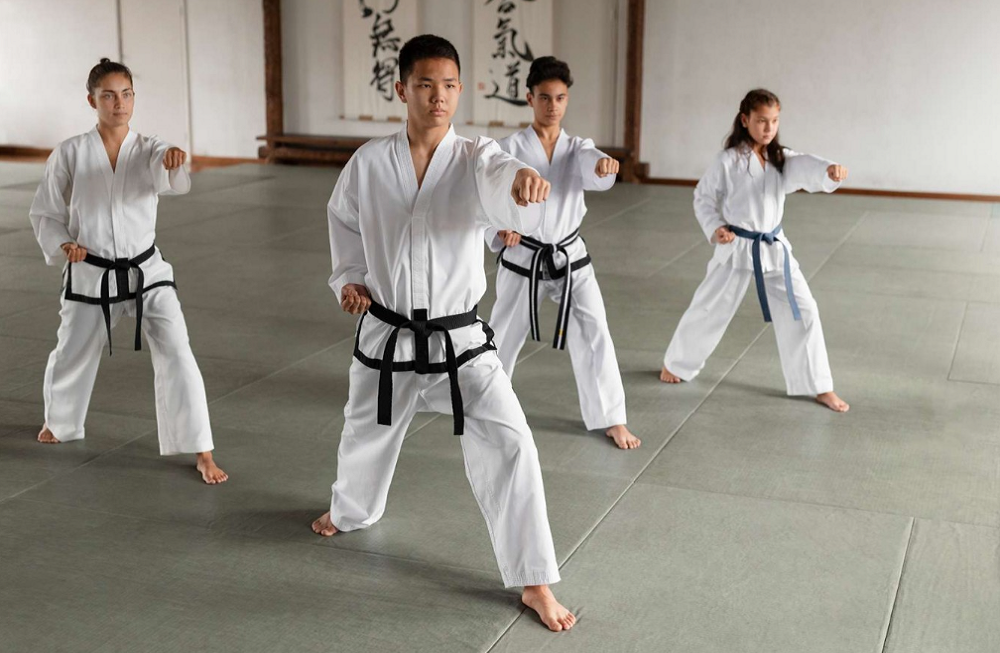
Every martial art carries a civilization within it. The way a discipline moves, the values it teaches, the philosophy embedded in its practice — these elements reflect the culture that created and refined the art across generations of dedicated practitioners. Few martial arts make this cultural connection more explicit, more celebrated, or more globally recognized than taekwondo.
Dbbet engages with martial arts as a growing dimension of international sports culture — disciplines that combine athletic competition with philosophical depth in ways that purely physical sports rarely achieve. Understanding what is taekwondo, examining its Korean origins, and placing it within the broader martial arts landscape provides essential context for anyone following combat sports development across Asian and global sporting markets today.
What Is Taekwondo? The Essential Answer
Taekwondo is a Korean martial art distinguished primarily by its extraordinary emphasis on kicking techniques — particularly head-height kicks, jumping and spinning kicks, and the fast-kicking combinations that make elite competition simultaneously athletic and visually spectacular.
The name itself provides the definition. Tae means foot or leg. Kwon means fist or punch. Do means way or discipline. Translated directly — the way of the foot and fist — the name describes both the physical emphasis and the philosophical dimension that separates genuine martial arts from pure fighting systems.




Olympic inclusion since 2000 in Sydney has given taekwondo the global institutional framework that transforms regional martial traditions into genuine worldwide sports. Today, over 80 million practitioners across more than 200 countries train in the discipline — making it one of the most widely practiced martial arts on earth by any reasonable measurement.
Is Taekwondo Korean? The Historical Answer 🇰🇷
The question of whether taekwondo is Korean has a clear answer — yes, unambiguously and deeply. Taekwondo’s development is inseparable from Korean history, cultural identity, and the specific post-war circumstances that shaped modern Korea’s relationship with its own martial heritage.
Korea has practiced indigenous kicking arts for centuries. Subak and taekkyon — traditional Korean fighting disciplines emphasizing leg techniques — provided the cultural and technical foundation from which modern taekwondo eventually emerged. Archaeological evidence suggests kicking-based martial practices in Korea dating back over two thousand years.
Modern taekwondo’s formal development occurred in the mid-twentieth century. Following Japanese occupation and the Korean War, Korean martial arts masters synthesized various indigenous traditions with influences absorbed during the occupation period into a coherent, systematized discipline. General Choi Hong Hi is frequently credited with significant contributions to taekwondo’s formalization and international promotion — though the discipline’s development involved multiple influential figures whose contributions sometimes generate historical debate within the taekwondo community itself.
Korean Identity and Taekwondo’s Global Mission
The relationship between taekwondo and Korean national identity is profound and deliberately cultivated. When Korea sought post-war international recognition and cultural projection, taekwondo served as one of the most effective soft power tools available — a distinctly Korean cultural export that spread Korean cultural identity alongside physical technique across every continent simultaneously.
Korean government support for international taekwondo development wasn’t incidental. It reflected strategic understanding that a globally practiced martial art bearing Korean identity markers would establish cultural presence in countries where other forms of Korean cultural projection couldn’t reach as effectively or as durably.
This strategy succeeded extraordinarily well. Taekwondo academies bearing Korean terminology, displaying Korean flags, and teaching Korean cultural context alongside physical technique exist today in cities across Africa, South America, Southeast Asia, and everywhere between — making taekwondo one of history’s most successful exercises in cultural diplomacy through sport.
The Technical Language of Taekwondo 🥋
Understanding taekwondo’s competitive and training dimensions requires engaging with the technical vocabulary that defines the discipline’s physical content. The kicking arsenal represents taekwondo’s most distinctive contribution to martial arts — techniques developed and refined to a sophistication unmatched in any other combat discipline.
The roundhouse kick — dollyo chagi — forms the foundation of competitive taekwondo. Executed to head height with explosive hip rotation and precise targeting, it generates scoring and knockout potential that makes it the most frequently deployed technique in elite competition. Mastering its timing, range management, and setup combinations occupies years of serious competitive development.
Spinning kicks — including the back kick, spinning heel kick, and the spectacular spinning hook kick — add complexity and knockout power to the competitive arsenal. When executed successfully at elite level, these techniques generate crowd reactions that reflect their genuinely athletic difficulty and competitive effectiveness simultaneously.
The front kick, side kick, and push kick provide defensive and controlling functions — managing distance, disrupting opponent rhythm, and creating the spatial conditions from which higher-scoring techniques can be launched with genuine competitive effectiveness.
Olympic Taekwondo: Competition Structure
Olympic taekwondo competition operates through a point-scoring system that rewards successful technique execution — electronic scoring systems now providing objective measurement that manual judging couldn’t deliver with equivalent consistency or credibility.
Weight categories structure competition across both men’s and women’s programs — ensuring that size advantages are neutralized within competitive brackets where technical quality determines outcomes more completely than physical dimension differences. Eight weight categories across genders provide competitive pathways for practitioners across the full spectrum of body types that the sport attracts globally.
Match structure involves three two-minute rounds with one-minute rest intervals — a format demanding both explosive technique execution and cardiovascular endurance that sustains competitive intensity across the full match duration. The physical demands are genuinely extraordinary — elite competitors combining flexibility, explosive power, balance, and tactical intelligence in ways that make taekwondo athleticism among the most complete in all of Olympic combat sport.
Taekwondo Within the Broader Martial Arts Landscape
Placing taekwondo within broader martial arts context reveals both its distinctive characteristics and its relationship to the wider combat sports family. Compared to judo’s throwing emphasis or jiu jitsu’s ground fighting focus, taekwondo’s standing striking specialization creates a genuinely different competitive and training experience.
Karate — perhaps taekwondo’s closest structural relative in the Olympic program — shares the striking emphasis while prioritizing hand techniques more extensively and approaching distance management through different tactical frameworks. The 2020 Tokyo Olympics featuring both disciplines simultaneously provided the clearest direct comparison opportunity — revealing complementary rather than redundant athletic expressions within the striking martial arts category.
Muay Thai and kickboxing share surface similarities with taekwondo’s kicking emphasis while operating under fundamentally different rule structures that permit elbow strikes, knee techniques, and clinch work that Olympic taekwondo’s format excludes. These rule differences create meaningfully different physical demands and competitive skill sets despite the apparent surface similarity of kick-heavy striking approaches.
Martial Arts Philosophy: The Do Dimension 🧘
Taekwondo’s philosophical dimension — embedded in the do suffix that separates martial arts from pure fighting systems — deserves serious engagement rather than dismissal as mere ceremonial framing around athletic competition.
The tenets of taekwondo — courtesy, integrity, perseverance, self-control, and indomitable spirit — represent a genuine ethical framework that serious practitioners incorporate into training culture and personal conduct beyond the training hall. These aren’t decorative additions to the physical content. They’re foundational elements that shape how technique is taught, how competition is approached, and how practitioners relate to each other within the discipline’s global community.
This philosophical dimension explains why taekwondo academies worldwide serve social development functions that purely athletic training programs don’t attempt — building character qualities in young practitioners that extend their developmental impact well beyond physical fitness and competitive skill.
Youth Development and Social Impact
Taekwondo’s global academy network has made it one of the world’s most significant youth development tools operating through sport. The discipline’s structure — progressive belt ranks providing clear achievement milestones, physical demands building genuine fitness, philosophical framework developing character qualities — creates a developmental environment that parents and educators across cultures recognize as genuinely valuable.
In Bangladesh and across South Asia, taekwondo academies have proliferated in urban and increasingly rural areas — providing structured athletic development for young people who might not have access to cricket or football infrastructure of equivalent quality. The minimal equipment requirements and relatively modest facility needs make taekwondo academies economically viable in communities where more resource-intensive sports programs couldn’t sustain themselves.
This accessibility dimension makes taekwondo genuinely democratic — a martial art where talent and dedication determine achievement more completely than economic background determines access, creating competitive pathways available across income brackets that many Olympic sports cannot match.
Global Competition Beyond the Olympics
Olympic competition represents taekwondo’s highest-profile competitive expression but not its only significant one. The World Taekwondo Championships, continental championships across Asian, European, Pan American, and African federations, and national championship circuits collectively create a competitive ecosystem that provides serious practitioners with regular high-level competition opportunities between Olympic cycles.
The Grand Prix series — bringing together the world’s elite competitors in multiple annual tournaments — maintains competitive intensity and public visibility across the full four-year Olympic cycle rather than concentrating attention exclusively around Games years. These events generate ranking points that determine Olympic qualification seeding, making them genuinely high-stakes for national programs targeting podium performances in the quadrennial competition that ultimately defines the sport’s global hierarchy.
Taekwondo’s Future Trajectory
Taekwondo enters its next development phase with both the institutional security of established Olympic sport status and the ongoing challenge of maintaining competitive relevance against the expanding global martial arts ecosystem that MMA culture has created.
Continued scoring system refinement — making elite competition more dynamically entertaining for audiences beyond dedicated practitioner communities — represents the most significant ongoing governance challenge. The electronic scoring systems already deployed have improved objective measurement considerably. Further refinements targeting the display of the sport’s most spectacular techniques will determine how effectively taekwondo maintains and grows its mainstream sporting audience across coming Olympic cycles.
The discipline’s Korean cultural foundation remains a source of genuine competitive and institutional strength — providing organizational coherence, governmental support, and cultural identity that makes taekwondo’s global community feel connected to something specific and meaningful rather than generically international. That cultural rootedness, combined with universal accessibility and genuine competitive depth, positions taekwondo well for continued global relevance across whatever transformations the broader martial arts and combat sports landscape undergoes in the decades ahead.