
Subperiosteal Implant: What It Is, How It Works and Who Needs It
While it is true that being told you don’t have enough jawbone to get a regular dental implant is not a condemnation, it is by no means a death sentence either. Your dentist may have been using the term subperiosteal implant to describe what he or she has recommended. It may sound complicated, but it’s actually quite simple. Let’s say it in simple terms, read through the post till the end so you know it entirely.
What is a Subperiosteal Implant?
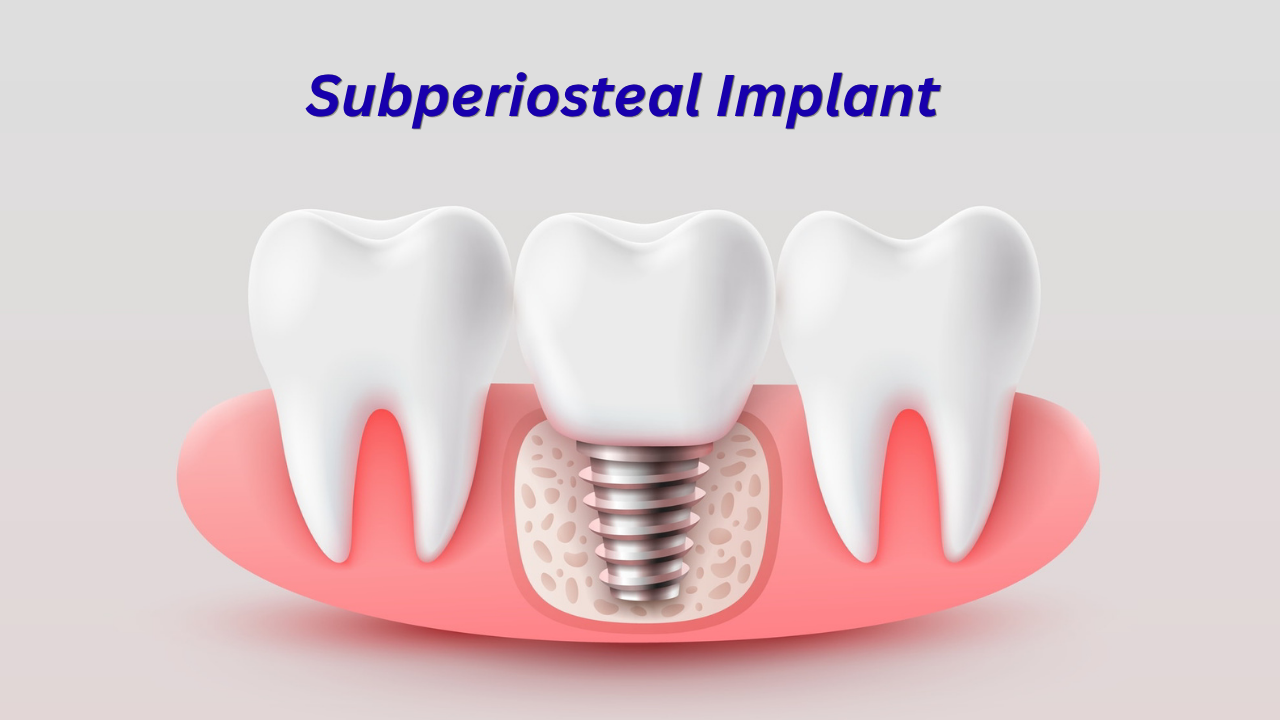
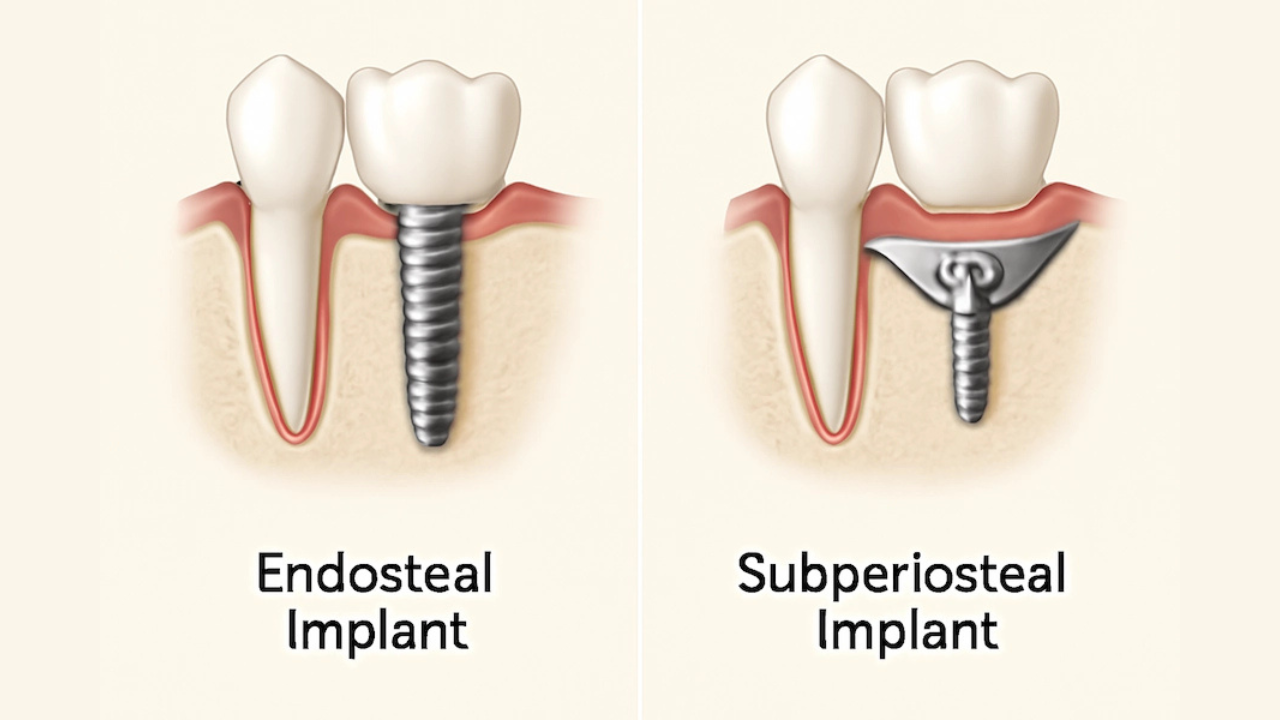
The subperiosteal implant is a dental implant that rests on the top of the jawbone, beneath the gums. To ease the confusion, the first part of the word “subperiosteal” is “sub,” meaning “under,” while the last part is “periosteum,” which describes the thin tissue covering the jawbone.
Unlike a standard dental implant, which is drilled into the jaw like a screw, this type is placed over the surface of the bone. Unlike a typical dental implant that is drilled into the jaw like a screw, this kind is used on the surface of the bone. Subperiosteal implants are not inserted into the bone. Rather, it sits on the bone and is secured by the growing and healing gum tissue.



The implant is a custom-made metal framework, typically of titanium. From this frame, posts extend through the gums and these posts hold your replacement teeth.
What’s the difference between the implant and a standard implant?
It’s important to understand how regular implants work to understand why subperiosteal implants exist.
The basic dental implant is a tiny titanium screw inserted directly into your jawbone. After a couple of months, the bone forms around it and fuses with the implant, which is known as osseointegration. A crown or artificial tooth is then put on top when it is in place.
This is great — if you have plenty of jawbone to screw into! Many people do not. Jawbone loss is very common. It is normal after tooth loss, and will worsen as time goes on if a tooth is not replaced. Over time, there are other factors that contribute to bone loss, such as certain health conditions and age.
That is where the subperiosteal implant comes in. It is especially created for those who do not have sufficient bone depth or width for a standard implant, or who are unable or unwilling to have the bone grafting surgery.
Who is a Good Candidate?
A subperiosteal implant is not suitable for all patients, but is a good choice in certain circumstances. If you do you may be a good candidate if:
Too much bone loss — If you have too much bone loss over time, standard implants might not be able to be installed. This is no problem in the case of a subperiosteal implant.
You don’t want to have to do bone grafting — This is a procedure that involves adding new bone to your jaw to add back bone. It is effective, but it extends the treatment time by months and has a recovery process. Some patients opt not to have it at all.
Your overall health is good. As with any surgery, subperiosteal implants need to heal correctly. Gums should be healthy and there should be no active infections.
You have a few or all of your teeth missing — If a patient requires a full arch of teeth to be replaced, the frame will support multiple artificial teeth at a time which is why Subperiosteal implants are particularly helpful.
Read Also: Autodraft AI: The Smart Tool Transforming Animation and Visual Storytelling
How is it carried out?
Over the past few years, the procedure for implanting a subperiosteal implant has been made much easier thanks to the developments of 3D imaging and digital scanning technology.
Step 1: Consultation and Imaging. Your dentist or oral surgeon will first carefully take detailed 3D scans or CT scans of your jaw. These scans provide a detailed picture of your jawbone shape, size, and condition. This information is utilized to create a frame that fits your mouth flawlessly.
Step 2: Custom Frame Design using scan data: The scan data will be used to create a metal frame that is unique to your jaw. This is not a universal-sized machine. Every subperiosteal implant is made to match the individual patient’s bone structure.
Step 3: Surgery – The gum tissue is gently opened up to reveal the jawbone. Custom-made frame is then just slipped on the bone! Gums are closed around the posts that stick out of the surface.
Step 4: Healing Period The gum tissue will heal in the next few weeks, tightening down on the frame to hold it. This healing time is quicker than is needed with standard implants that need months of bone healing.
Step 5: Attachment of the Teeth: When healed, the posts are then attached to your artificial teeth – these are either single crowns or a full arch. This is the end of the process and your new teeth are ready for use.
How will the benefits be gained?
No bone grafting is required: This is the greatest benefit to most patients. The person will have a shorter total treatment time, and a single less surgery to recover from, as the bone graft is not necessary.
Custom fit: The fit is accurate and secure due to the fact the frame is created particularly for your jaw.
The timeline is as follows: When you want to get the desired results, you might be able to do so in a shorter period of time than the traditional implant process and bone grafting.
Multiple teeth supported structure: Many teeth can be supported by the frame structure, which is suitable for a patient who needs to have the entire mouth reconstructed.
The implants used are subperiosteal, so they have been used for many years. They’ve been used for many years in dentistry, and there’s a long history of them.
What are some drawbacks?
The flip side of the story should not be forgotten either.
Currently not as popular: Many dentists today have come up with other options to be considered due to the advancement in bone grafting techniques and the invention of mini implants. You may need to do some research to find a specialist who has experience with subperiosteal implants.
Higher cost: Custom-made frame and a more complicated procedure make it more expensive than regular implants.
There may be possibilities of complications: If the frame moves or if the gum tissue does not heal correctly, there may be possibilities of complications. The most common concerns are infection and frame movement.
Not a permanent fit or cure for all — In some instances, the bone eventually continues to shrink under the frame over time, impacting the fit and stability over time.
Discuss the similarities and differences between subperiosteal and endosteal implants. Compare subperiosteal and endosteal implants.
Subperiosteal vs. Endosteal Implants: Quick Comparison
| Feature | Subperiosteal Implant | Endosteal Implant |
| Placement | On top of the jawbone | Inside the jawbone |
| Bone requirement | Low bone volume is fine | Requires sufficient bone |
| Bone graft needed | Usually not | Sometimes yes |
| Healing time | Few weeks | Several months |
| Best for | Significant bone loss | Adequate bone volume |
| Cost | Higher | Moderate to high |
The lifetime of subperiosteal implants is not known.
A subperiosteal implant can last for many years if it is properly cared for. Their duration of functioning has been more than 10-15 years in some patients. But the lifespan is greatly dependent on the quality of the frame fit, overall health and oral hygiene.
It is important to have routine dental check-ups. Over time, your dentist will need to check on the condition of the frame, the surrounding gums, and the health of your jawbone.
How much would they cost?
The cost is dependent on where your dentist or oral surgeon is located, the complexity of your case and the dentist or oral surgeon you choose. Subperiosteal implants are more expensive, in general, than standard implants due to the special manufacturing required.
The price in the U.S. varies between $2,500 and $6,000 for each implant, and a full arch, with a subperiosteal frame, may cost much more. If you have dental insurance, you should ask if any part of your implant will be covered. Some plans do cover part of the implant treatment.
Final Word
While not the most popular dental implant option, a subperiosteal implant may be life-changing for the right patient. When you feel dental implants are not an option due to the loss of bone, this option proves that it is.
It’s important to find a qualified oral surgeon or prosthodontist who has experience in this exact procedure. Discuss and ask questions, look at the case before and after and ensure you understand the process thoroughly before proceeding.
Remember, a person with a smile may end up in a substantial smile. Don’t let the loss of teeth come between you and your smile, or eating and speaking comfortably. However, a strong and natural-looking smile is still achievable with the right solution for you.
Read More: PSC Thulasi Login: Access Kerala PSC My Profile & Hall Ticket