Application for Sick Leave: Some Best Formats in 2026
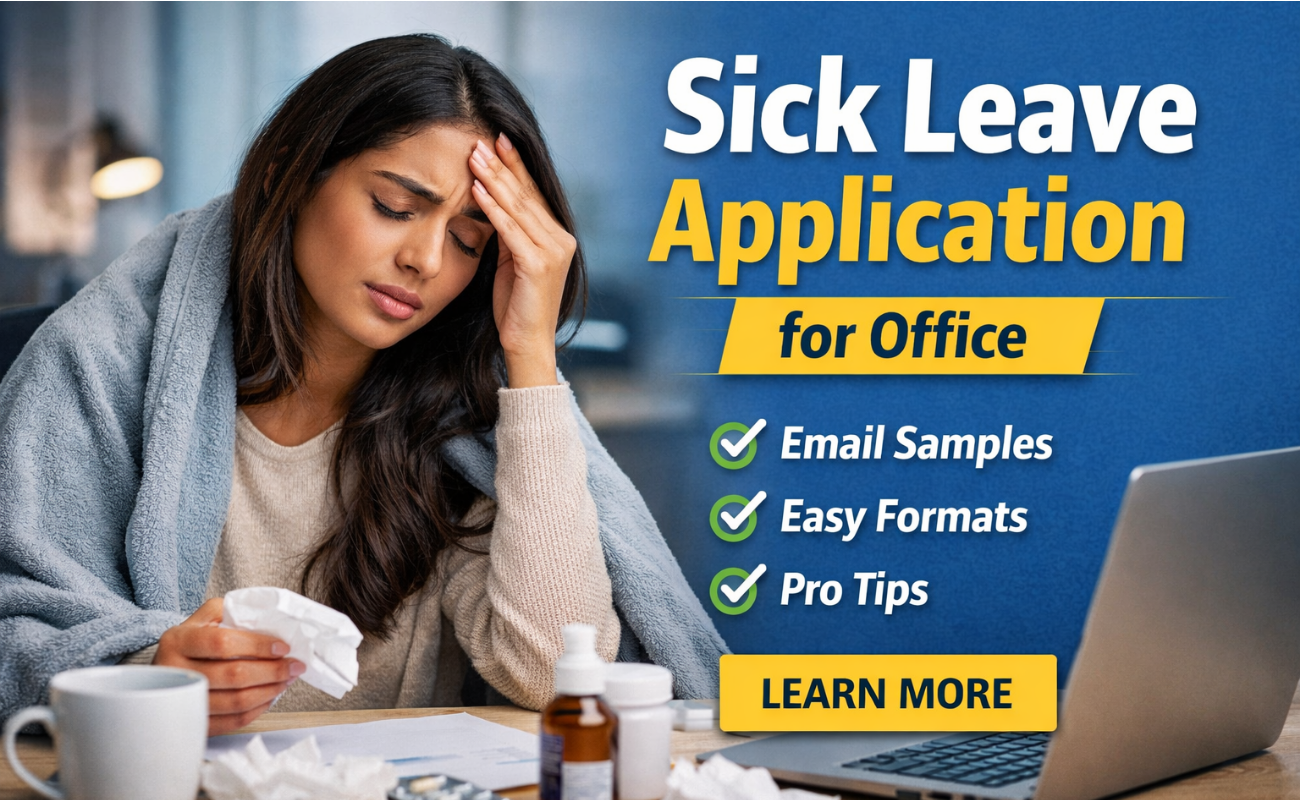
If you are an employee of any reputed company and you want to know how to write a good sick leave application in 2026. In this article, we will give you many good sick leave formats for writing and communicating with your boss. So, get the best sick leave applications that you can use by simple copy fasting in any institution.
The professional examples and the real workplace communication advice for the sick leave applications
A professional and formal sick leave application should clearly say that you are unwell and provide a realistic thought of how long you will be away, explain what happens to your current work and show the honest availability boundaries. If you think that a sick leave communication is just a formality, it is not correct, and you have to give the trust signal also in the application.
Many professionals worry about taking sick leave that can make them look unreliable, especially in high-pressure environments or hybrid workplaces where illness is less visible. Software.
At this moment, we have to write modern sick leave like good communication, full clarity, boundaries and full workplace trust rather than dramatic explanations or perfect formatting. Here, know the best sick leave application below in the article.




What’s Inside
- How to actually write a sick leave message
- What every request needs to include
- Why calling in sick feels so damn stressful
- Real examples you can copy and tweak
- How much medical info to share (spoiler: not much)
- Email vs WhatsApp vs Teams — which to use when
- What your manager secretly wants from you
- Mistakes that make you look bad without realizing it
- Handling sick leave when work is insane
- Using AI to draft without sounding like a chatbot
Need More Leave Formats?
Got you covered. Check out [Leave Application for Office – 20+ Formats for 2026] for casual, annual, and emergency leave templates. For quick mobile messages, peek at [Sick Leave SMS Templates] and [WhatsApp Leave Message to Boss].

How to Write a Professional Sick Leave Application
What should your message actually say?
Three things. Unwell. Gone for how long? Work handled. That’s the whole formula.
Your manager isn’t a doctor. They don’t need your diagnosis. They need to know who to move your meetings to and whether that client call needs to be canceled.
Why does calling in sick feel so uncomfortable?
Because somewhere along the way, we learned that “professional” means “never miss a day.” Especially in high-pressure jobs or when you’re working from home, where nobody can see you coughing into your pillow.
The guilt is real. But it’s also useless. You’re not helping anyone by working through a fever and sending garbage output.
What does your manager actually need to know?
Simple stuff:
Who’s missing
Which deadlines just got riskier
Do clients need a heads-up
That’s it. They don’t need your temperature reading. They don’t care about your pharmacy run. They need to replan. Help them do that.
Why does short beat long every time?
Because your manager is probably already drowning. Monday morning. Inbox full. Three fires are burning. Then your novel-length email about intestinal distress lands in their lap.
Short messages get read fast. Long ones get skimmed or saved for later — which means later never comes.
Real talk from someone who’s managed people:
Most managers care more about whether you communicate clearly and keep your work visible than about how sick you actually are. A calm, short message builds more trust than a panicked essay.
What a Strong Sick Leave Request Needs
Think like your manager. What helps them plan? Not what sounds impressive.
- How long you’re out. Be specific. “Today only.” “Today and tomorrow.” “Probably until Thursday, I’ll confirm Wednesday afternoon.” Vague timelines force your boss to guess.
- Basic health context. “Not feeling well.” “Flu symptoms.” “Stomach bug.” Enough to be real, not enough to be TMI.
- Your availability. “Fully offline.” “Might check email once this afternoon.” “No calls, period.” Set the boundary. Protect your recovery.
- Work coverage. What’s due today? Who’s covering? Where are your notes? Make it easy for people to step in.
- When will you update next? “I’ll ping you by 4 pm tomorrow.” Gives a checkpoint without trapping you in promises.
- Medical certificate note. If your company requires one, say you’ll send it. Don’t wait for them to ask.
- Tone that fits your workplace. If everyone uses first names, don’t start with “Respected Sir.” Match the culture.
Read Also: How to Access atmmon.sbi: A Complete Guide to SBI’s ATM Monitoring Login
Compare Strong vs Weak Message
| I am sick today. So, I can’t go to the office. | Hi,[Magager], I’m not well today and out of work. I have updated my tasks [tool] and flagged the [x] deadline. [client] will call at their needs resignation and notes are in the shared folder beautifully. I will do it update later this afternoon about tomorrow.” |
| “I won’t be in, not feeling well today.” | Dear [Manager], I am feeling rough and sick today, so I won’t be able to make it to the office. [Client] call at 3 pm will need to cover the notes that are in the shared folder. And then I will be mostly offline, but will confirm by 5 pm how I’m doing for tomorrow.” |
| Three paragraphs about symptoms, medications, and your grandmother’s remedy | Hi [Manager], down with flu-like symptoms and out today, likely tomorrow. Handed urgent tasks to [colleague] and updated the full info about the project. I will confirm the return date by tomorrow afternoon and can share a medical cert if needed.” |
Why Calling in Sick Feels So Emotionally Hard
The reliability trap
We secretly believe good employees show up no matter what. Broken leg? Hop to your desk. Fever 102? Zoom call with camera off. This mindset is toxic and everywhere.
When you’re actually sick, this belief crashes into reality. Cue guilt. Especially if you’re new, on probation, or gunning for a promotion.

Why we over-explain
Because we think illness needs a lawyer’s defense. If we describe every symptom, maybe they’ll believe us. Maybe we won’t look lazy.
Here’s the truth: your manager needs timing and coverage info. Not a medical essay. The more you explain, the more you look like you’re trying too hard to convince them.
Real talk: Professional sick leave isn’t about proving how sick you are. It’s about giving your manager enough to plan around you while keeping your dignity intact.
Actual Examples You Can Use
One-day sick leave email
Subject: Application for sick leave today
Dear [Manager]
I am not feeling well after waking up and feeling awful. I feel like I can’t go to the office today. I have updated my tasks in [tool] and flagged the [X] deadline. Also, the info of a [client] call at 3 pm can go to [colleague] — I’ve added notes in the shared folder.
Will send an update later this afternoon on how I’m feeling for tomorrow.
Thanks,
[Your name]
Multi-day sick leave
Subject: Sick leave application from [date] to [date]
Hi [Manager],
I have fallen into sickness and the doctor said that I need to rest for a few days. So it is very urgent to take sick leave to handle this situation. Updated the project board and handed urgent items to [colleague].
I can provide a medical certificate if needed. Please issue me this sick leave from [check-in date] and I will come to the office after recovery.
Regards,
[Your name]
Same-day WhatsApp or SMS
Hi [Manager], I’m unwell and taking sick leave today. Updated my tasks in [tool] and let [colleague] know about the [X] meeting. I’ll be mostly offline and will share a quick update this evening about tomorrow.
How Much Medical Detail Should You Share?
Short answer: barely any
For a day or two off, your manager needs to know you’re not faking it and when you’re back. “Unwell.” “Flu symptoms.” “Doctor’s appointment.” That’s your vocabulary.
Privacy vs. professionalism
Talk about what you can and can’t do. When will you update next? Don’t hand over your diagnosis unless HR policy or long-term leave demands it.
Why oversharing backfires
Nobody wants to read about your bathroom schedule. Detailed medical stories make everyone uncomfortable and never change the work plan.

| Too Much | Just Right |
| Describing every symptom, test result, and pill in your email | “I’m unwell with flu-like symptoms and will be off today and likely tomorrow.” |
| Sharing your entire medical history to justify one day | “My doctor advised rest for a few days; I’ll share a certificate and update you on my return date.” |
| One long paragraph of apologies and personal details | “I know the timing sucks with [X] happening, but I’m not well enough to work today. [Colleague] has the urgent stuff.” |
Where to Send It: Email, WhatsApp, Teams?
Email = formal record, multi-day leave, attaching docs. Still the default for most places.
WhatsApp/SMS = quick morning updates, same-day changes, shift workers.
Teams/Slack = status updates, letting your team channel know, setting yourself to “Out sick.”
HR portal = official tracking, leave balance and uploading medical certificates.
Phone call = when policy requires it, or when something sensitive needs explaining, voice-to-voice.
| Channel | Use It For |
| Formal requests, multiple days, attaching medical certificates | |
| WhatsApp/SMS | Fast morning updates to your manager or shift supervisor |
| Teams/Slack | Status updates, team channel notes, setting yourself away |
| HR Portal | Official leave application, tracking balances, document uploads |
| Phone Call | Policy-mandated calls, sensitive situations needing direct talk |
Remote work twist: When nobody sees you at a desk, your calendar and project board become your presence. Mark yourself out. Update shared trackers. Otherwise, people think you’re just ignoring them.
What Your Manager Actually Wants (But Won’t Say Out Loud)
Early notice
The sooner they know, the more options they have. A 6am message beats an 11am “oh by the way.”
Realistic timing
Don’t say “back tomorrow” if you know you’re down for three days. False optimism creates more chaos than honesty.
Visible handover
Your work should live in tools, not your head. Shared folders, project boards and documented notes. When your manager doesn’t have to hunt for information, you become easier to cover.
- Situation: What Your Manager Cares About
- One day off: Quick heads-up, today’s impact, basic availability
- Several days off: Rough duration, documentation if needed, coverage plan
- Keep getting sick: Patterns, whether you can do the job, medical support if it’s serious
- Working remote: Status visibility, updated tools and clear boundaries on reachability
From someone who’s been on both sides:
A sick leave message doesn’t need to prove your dedication. It needs to make your absence predictable and your work manageable. That’s the whole job.
Mistakes That Quietly Damage Trust
Over-explaining symptoms
Makes you look defensive. Short and confident beats long and apologetic.
Going dark after promising updates
Said you’d check on Wednesday? Check in on Wednesday. Even if it’s just “still unwell, need one more day.”
Promising full availability while sick
“I’ll be on email all day,” while you’re running a fever, helps nobody. You recover poorly. Your work suffers. Be honest about boundaries.
Ultra-formal messages in casual workplaces
If your team says “hey” and “thanks,” don’t drop a “Respected Sir/Madam” bomb. Match the vibe.
| Don’t Do This | Do This Instead |
| Long medical stories every time | Short explanation + clear dates + handover |
| “I’ll let you know,” then silence | Specific check-in time: “I’ll update you by Wednesday afternoon” |
| “Fully available!” while on sick leave | Honest boundaries: “Might glance at email once, responses will be slow” |
| Formal letters in informal teams | Tone that matches how you normally talk to your manager |
Sick Leave When Work Is Insane
Month-end, audits, launches — the worst timing
Transparency beats heroics. Tell your manager ASAP. Flag what’s done. List what’s pending.
Let them reroute work.
Pushing through at half-capacity creates errors you’ll spend twice as long fixing later.
Client-facing, consulting, startup life
Continuity is everything. Early warning. Backup for key meetings. Notes accessible. In lean teams, good documentation matters more than suffering through while sick.
Using AI to Draft (Without Sounding Like a Chatbot)
The upside
AI can spit out a structured sick leave message in seconds. Useful when you’re too dizzy to string sentences together. It covers the basics: reason, timing, impact, and next steps.
The downside
Raw AI output sounds… off. Generic. Slightly cold. Too formal or too vague. Not quite you.
How to fix it
Let AI draft. Then edit. Shorten long sentences. Add references to your actual tools or projects. Fix the greeting and sign-off to match how you really write.
Real talk:
AI is a starting point, not your voice. The best sick leave messages mix AI speed with your actual personality and workplace know-how.
Final Word
Here’s a simple trick. Write like you’re texting a busy friend. Short sentences. No fluff. Say what you need, say what’s covered, say when you’ll check back. That’s it.
Your manager doesn’t need a story. They need to know the work won’t fall apart and when they’ll hear from you next. Do that, and you can go back to bed without your phone buzzing.
The best sick leave messages sound like a real person wrote them in under a minute. They don’t try too hard. They don’t use fancy words or long explanations. They just get the job done so everyone can move on. That’s the whole point — make it easy on your team and easy on yourself.
Read More: PSC Thulasi Login: Access Kerala PSC My Profile & Hall Ticket